Friday, January 13, 2012

Of Mice And Crummy Endings Part II

Is expanding my impression of this book into two journals a blatant attempt to get more journals out of less reading? Man, I just really liked this book, and wanted to write a lot about it, and that combined with my really busy life has made it the only book I've read in a while. Get off my back.

SO, to my original point- why is Steinbeck awesome? It can't hurt that the characters he weaves into his stories and the lives they live are inherently interesting. Nothing seems more boring to me than a book about rich people. As I'm reading, all I can think is "Stop whining, you're doing fine." Oh, Jay Gatsby, your girl left you while you were away at the war? The family in The Grapes of Wrath, who lived at the same time as you, are STARVING TO DEATH. Ask me how much I care about your feeling of emptiness. Money can't buy happiness, but it can definitely make misery suck less.

Steinbeck puts everything one level beneath the outside. I respect that. He doesn't ram a moral in your face, but you also don't need a cryptology degree to figure out what's going on. The infamous Turtle Chapter of Grapes of Wrath is a perfect example. Everyone's quick to say that it was meaningless or silly, but it was an easy image to put into the head and had an obvious message. I feel the sense of accomplishment that comes from literary analysis, but I don't really have to try that hard.

I've found that Steinbeck carefully balances dialogue and description so that dialogue teaches you about the characters, while description teaches you about their situation. The world around the characters is what shapes them in every book; fate, happenstance, etc. make them who they are. This has an everyman appeal; I can place myself into the work boots of any character, and it proves that the characters are meant to be representative of everybody who undergoes the same experiences.

So, in conclusion, John Steinbeck is the best they was, the best they is, and the best they gon' be.

Of Mice and Crummy Book Endings

John Steinbeck is, by far, my favorite writer. Every piece I'd read by him was an enjoyable read with an engaging storyline, but I'd always wondered exactly what it was about Steinbeck's writing that made him so readable. To figure this out, I read his only major work I hadn't experienced before: Of Mice and Men.

Now, the important question "why is he so amazing" has to be put aside for a moment so that I can rant about the ending of the book. Throughout the entire novel, I had enjoyed the message of the importance of life and how people have value outside of their utilitarian means. A simple example of this would have been the dog at the ranch; he was old and couldn't do a single useful thing, but it was still cringe inducing to hear him die. His owner was clearly upset that his dog was being killed, even though he did finally allow it to go. I like that message. Life is pretty sweet, and anybody who wants to defend it is okay in my book.

Then, Lennie gets shot. This is a dumb ending! What is that, I says to myself. I says self, Steinbeck must be doing something or else this wouldn't be considered one of the greatest books of all time. But seriously now? What is this? Now I have to start all over trying to figure out what the novel actually means, and it means I'm going to have to validate death. This is dumb.

But wait! Maybe not! Mrs. Reilly mentioned last year that the book had something to do with being a worker during the Great Depression, which wasn't a far reach for Steinbeck. His novella The Pearl had been about the dangers of greed, so maybe that plays into it. I finally reach a conclusion that makes some sense to me.

The book isn't trying to validate death, but rather make it look disgusting and show how horribly necessary letting things go in those desperate times was. The dog was eating food and wasting space/other resources. It's useless! It must go, for the people are poor and resources scarce. Lennie was going to ruin George's life, and if not send George to prison at least keep him out of work for a long time. George couldn't afford that, and had to get rid of him, as cruel as that was. A foil to this brutality could be found in the ranch-owner's son; he was a rich kid who was living in excess, showing that the huge wealth gap was erosive to all people.

Boom.

Friday, December 16, 2011

Everybody Click Here

Reporting live from AP English Class! I validate myself through page views on this thing, so if you could just stay on this page and hit F5 a couple of times, I'd appreciate it.

Sunday, November 27, 2011

Love Christmas

A few weeks ago, the greatest thing ever happened.

Christmas started.

Christmas is definitely more than just a single day. All of my life, I've felt disappointed in Christmas at about 7 at night. That's it? That's the whole thing? Everyone makes such a fuss, that you assume it must be a life changing day. That's why I consider any sign of Christmas- songs on the radio, lights up, all that jazz- as the effective start of Christmas.

Even if Thanksgiving or December hasn't come yet, we should still be happy to see Christmas come. The first thing everyone rags on are Christmas songs on the radio. "Wahhhhhhhh, it isn't thanksgiving yet! I can't be joyful and thankful at the same time! I need Lil' Wayne!"  These people are genuinely bad people. Christmas is a time of happiness and joy and anyone who wants to put it off even 5 minutes has no soul. If you get bored of happiness and joy, you have no soul. You should be doing more christian things, like deciding who does and does not have a soul.
The Choice Is Yours


Nordstrom famously put out a sign before Thanksgiving saying that they wouldn't be "Decking the Halls" until December 1st, proving that the anti-Christmas crowd is gaining sway. But you can fight back. Love Christmas all of the time, because Christmas loves you all of the time. It can make you happier if you just accept that you can enjoy peace and love for more than one month out of the year.

Monday, November 14, 2011

The Powers

"The Song of The Powers" - David Mason

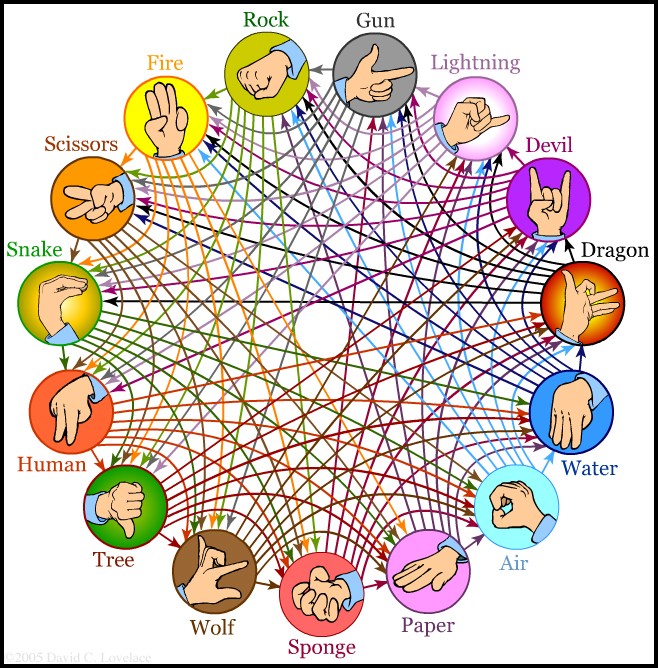
Mine, said the stone,
mine is the hour.
I crush the scissors,
such is my power.
Stronger than wishes,
my power, alone.

Mine, said the paper,
mine are the words
that smother the stone
with imagined birds,
reams of them, flown
from the mind of the shaper.

Mine, said the scissors,
mine all the knives
gashing through paper’s
ethereal lives;
nothing’s so proper
as tattering wishes.

As stone crushes scissors,
as paper snuffs stone
and scissors cut paper,
all end alone.
So heap up your paper
and scissor your wishes
and uproot the stone
from the top of the hill.
They all end alone
as you will, you will.
I was at first overwhelmed by the selection when I was asked to memorize a poem from a list the size of a phone book. My immediate reaction, being the positioning jerk that I am, was to memorize a poem by a big name author so that I could flaunt it sometime down the road. My decision to rest with a 10 year old poem by a more obscure author was an easy one, however, as this poem reached to me in a way few have before.

Nothing quite annoys me in poetry as much as when the poet assembles his words in a pretentious, jejune assembly of imagery without any grounding. If you're going to use a metaphor, make it a unique and powerful one. I don't care if your emotions flutter and shake like the breeze. Apparently, everyone's do. That's what made this poem grab me so well. The metaphor it used was pertinent, fun and original. It conjures images of standing on the street outside of St. Ann's Elementary School playing with my friends, but also conveys a message I find myself forgetting too often as I apply to university. All the fuss I make at school or home or trying to get this or that award is really an exercise in futility, and I have to remember that if I'm not doing it for fun, I might as well not do it.
But he gets a "B" on intricacy. He could have a lot of fun with this.

Saturday, November 5, 2011

Occupying The Homeland

Today, I joined a hippie commune.


Facebook was the first place where I heard about Occupy Delaware. They'd spent a day in Rodney Square and then got kicked out. Sounds like my kind of party, I says to myself. I says self, I should see if I can get involved in this kind of a thing, so I follow them on Facebook. Controversy brings the group into the News Journal, and the next thing I know, I'm Occupying Fletcher Park.


And on a pretty good day for it, too.
If you know me well, you know that I'd love to discuss the politics or the usefulness of a movement like this, but that's not what I wanted to write about. Being a part of today's rally fueled  my understanding of democracy in a way that brought the term into reality for me. Frankly, it's a textbook term. We're all habituated to it, and it becomes more of a given than a beauty to us. It has been significant to me before, but this really jolted it for me.

The first moment where the meaning of it came to me was while we were marching. We went up Market St. around to Rodney Square, the symbolic center of Wilmington and home to many banks, including the Bank of America headquarters. What it meant to be a taxpaying citizen became clearer to me during the march. These streets really were mine. I'd payed for them. I payed for the park. The idea of independent humans choosing to come together and use their money for the benefit of everyone is just so neat. I watch CNN daily, and in the hustle of the social debate we forget what it all even does. It becomes a show, and the government just a character on the TV (not much different from The Jersey Shore a lot of the time). On top of that reminder, I remembered that I have the right to go there and speak ill about the government that organized it. Let that sink in. Look outside and recognize that in a very real sense, you own that street. You share it, but you own it, and you can say almost anything there and do a lot of things there. The constitution is three dimensional, and applies right here.

Me marching, Courtesy of Occupy Delaware
Four hours later, my new sense of what patriotism really was came at my first Occupy Delaware General Assembly. Occupy Delaware considers itself a group without leaders, only with organizers. All decisions must be voted on by whoever decides to show up. What do you know! I showed up. As I sat on public property and debated a central issue of the Occupy Delaware Movement- should they stay at Fletcher Park illegally or be bullied into the obscurity of Brandywine Park- a whole new wave of democratic feelings overcame me. Everybody was gathered around a few people who wanted only to maintain order. The decisions rested on everyone as a whole. Anyone could speak, and anyone could say anything they thought appropriate, and finally, everyone had a final vote. Once you see pure and real democracy, the entire idea of an election or a vote seems a lot more meaningful than it did before.
The General Assembly where I'm sitting between a teacher and a veteran. Courtesy of The News Journal
As I said, this post isn't meant to be about the stances of the movement or the debate over the location of Occupy Delaware, both of which are pretty touchy subjects. I'd love to address them, but this isn't the place. But no matter what you say about the movement, it is democracy at its purest. The only thing that disappointed me was that I was the only high school student there. Our generation stinks at caring about things.


Oh, and for anyone who likes a good laugh- two dishes of food were brought to the event, a vegetarian pasta salad and baked ziti with meat in it. The hippies devoured the whole pasta salad in minutes, and four hours later there was still half a ziti sitting there. 

Thursday, November 3, 2011

"Go To Grass. You Have Eaten Hay Long Enough."

To start off the new blog, I wanted something interesting, powerful, and rugged.

But alas, all I found was Gene Wilder with a beard.

I bought Walking, a long essay by Henry David Thoreau, while on a family vacation in West Virginia. The essay intends to show the reader what the true art of taking walks is. If you think you can take a walk, Thoreau disagrees. He states that he's only met two other people in his life who knew how to walk. So what does this purist say constitutes a real walk? You cannot plan where you are going. You just have to allow your legs to move you, and hope that you can find your way home like a lost dog. You have to fully make yourself a part of nature; any mindset that you had back home has to leave you entirely. "If you are ready to leave your father and mother, and brother and sister, and wife and child and friends, and never see them again-if you have paid your debts, and made your will, and settled your affairs, and are a free man, then you are ready for a walk."

Thoreau's writing quickly takes on the nature of his walks- he goes all over the map. He speaks at length about his preference of swamps over nice land, his hatred of gardens, his hatred of names, his hatred of man's inclination to focus more on the world of his creation than the true, natural world, his hatred of human learning and thought,and his love of pine trees.


So if you're a person or were made by a person, HDT isn't a big fan of you.


I realized while reading this that a lot of his messages- closeness with wildness, the meaninglessness of words and symbols- have appeared many times before in things I've read. Shakespeare and Plato have said the same. And yet, no matter how many times these same sentiments may be repeated, my mind feels stretched by every reincarnation of the same idea.
Cliche and mind-blowing.
We forget, I guess. That living as wild and instinctive beings is natural. We forget that pretty much everything that we use day-to-day is made up, and every time we're reminded of it, we can't help but be shocked. No matter how many times we're told otherwise, our new natural seems to be fake. It's disgusting.